

1. A moment on the floor
2 a.m., on the floor of a plastics plant in southern China. I’m standing next to a visual inspection rig we deployed three months earlier. A red box flashes on the screen — false positive. The operator glances up, reaches over, taps “accept,” and says nothing.
I pull up the logs. Week 1 on the line: 94% accuracy. Month 2: customer complaints about missed defects, so an engineer added a rule. Month 3: a new defect class, another rule. Now there are 47 if-else patches wrapped around the model, and nobody on the team will touch the model itself anymore. A new hire had taken over the system the week before. His first words to me were: “I can’t tell what this thing is actually deciding anymore. Can you?”
That was the moment I realized: this system is already dead. It hasn’t crashed. It hasn’t errored out. It’s just turned into a patched-up old coat hanging on the line, reminding everyone that “we did AI here.”
This wasn’t one project. This was the same scene, playing out across dozens of systems I shipped over five years.
2. Who I am
I’m Yuanwei. PhD in nuclear engineering — radiation protection and radiation measurement, where the foundational skill is pulling a real signal out of background noise in a way that’s auditable and reproducible. In 2021 I moved from nuclear into industrial vision. The math is identical; the subject changed from reactors to production lines.
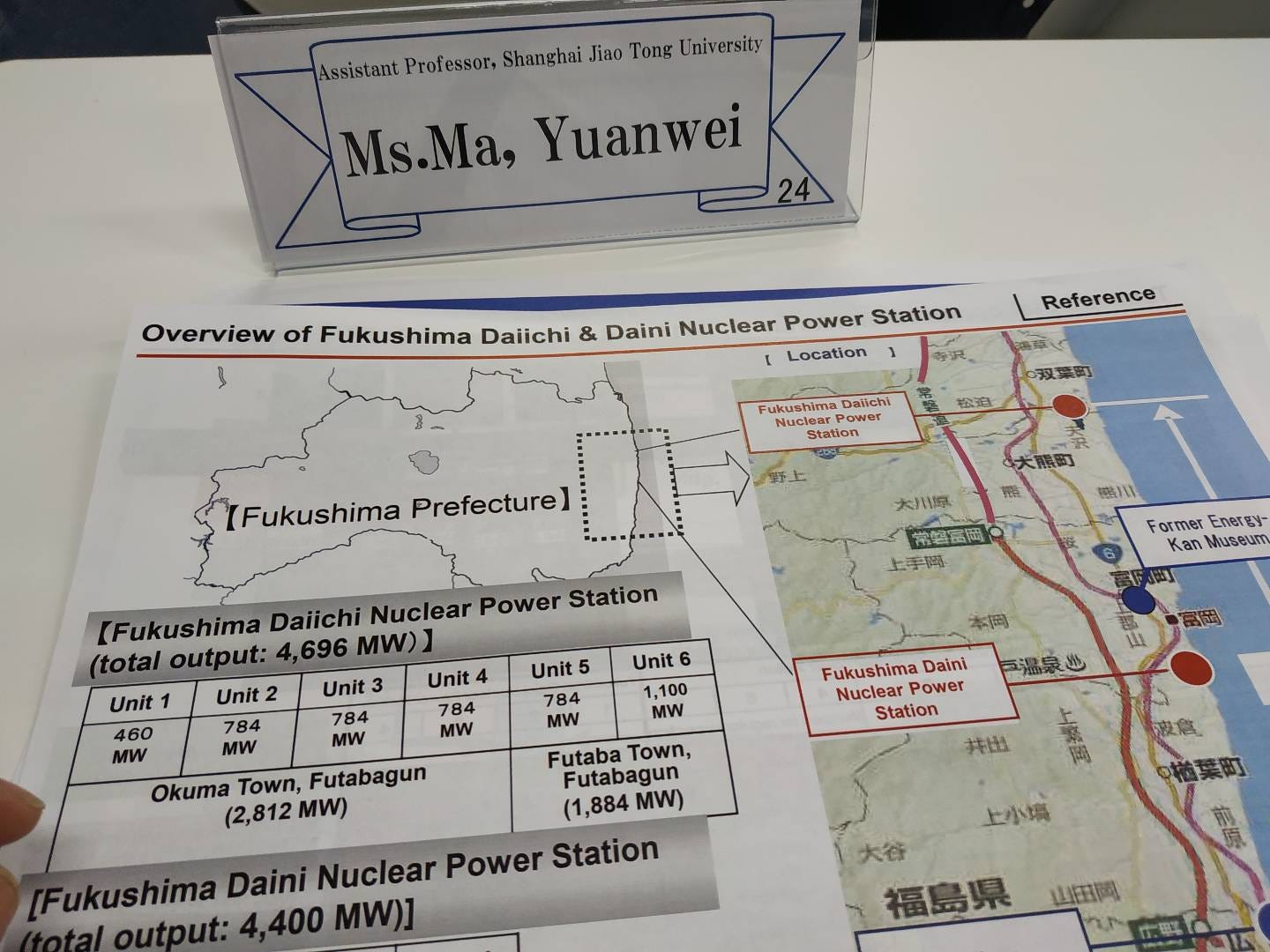
2018, suiting up before entering the Fukushima accident site.
The next five years, on factory floors in China:
Shipped dozens of surface-defect inspection systems — phone glass, precision machined parts, injection-molded housings — together generating close to $28M USD in revenue, with customers including Microsoft, Apple, Amazon, and BYD
Led robot deburring and automated welding programs at large manufacturers — real metal, real sparks, real arms
Built three separate attempts at productizing the whole thing — not another one-off project, but something repeatable across customers
Along the way I picked up about 50 granted patents, co-authored two Chinese national AI standards (GB/T 42755 and GB/T 43782), and received the Wu Wenjun AI Science and Technology Award as 1st ranked contributor — one of China’s most prestigious AI prizes.
None of that is the point. The point is that none of it saved a single project from the patch trap.
This is the kind of résumé you only get by standing next to the equipment. I know the parts that never make it into the deck — the 1 a.m. customer calls, the plant manager’s death stare, the blame loop between the equipment vendor and the algorithm team, and the tired look an AI engineer gets when yet another new defect class shows up.
I didn’t learn manufacturing from papers. I learned it from standing next to the machines.
3. The real problem I saw: the patch trap
China’s manufacturing sector isn’t short on AI projects. It isn’t short on data, engineers, or opportunities. But over the last five years I kept watching the same thing happen —
every smart-looking AI project eventually slid into patching.
The loop is always the same:
Model goes live. 90%+ accuracy. Customer is happy.
A new defect shows up in the field. It gets missed. Customer calls.
No time to retrain. The engineer wraps an if-else rule around the edge case.
Next month, another new defect. Another rule.
Six months in, dozens of rules stacked around the model. Nobody can explain why it decides what it decides.
Three years in, the original team has rotated out. The new engineers inherit a black box. Nobody will touch it.
Eventually the line quietly returns to full manual inspection. The AI rig sits there with its status light on, ceremonially.
I call this the patch trap.
This isn’t one company’s problem. It’s structural. And the root cause isn’t that the technology is weak. It’s this:
Customers want 100%. AI delivers 95% and a confidence interval.
The process itself was never simplified before AI was asked to make sense of it.
Organizationally, nobody accepts “AI can be wrong” — so every mistake has to be caught by another rule.
Nobody wants to go back and fix the first four things — materials, tooling, process, workflow. Everyone jumps straight to step five: install AI.
The patch trap is not a technology problem. It’s an ordering problem.
(Why do we all instinctively reach for “one more rule”? A customer gave me the answer five years ago, and it took me five years to understand what he was saying. More on that in the next post.)
4. I’m not giving up — I’m trying a different path
I’m not going to sit here and complain about the industry. Complaining doesn’t ship anything.
I’m trying a different approach. The core idea is almost embarrassingly simple:
Before installing AI, make the process legible to AI.
A concrete example: one of our projects was stuck at 95% accuracy for three months. The algorithm team tried 3 architectures and over 10 hyperparameter configurations — nothing moved. The breakthrough came from outside the algorithm: we swapped the workstation lighting from 4000K cool-white to 5000K and added a polarizing filter. Accuracy jumped straight to 99.2%. This wasn’t an AI problem. It was a floor problem.
After this kind of thing happened a few times, I realized: this isn’t an algorithm problem — it’s an organizational one. Algorithm engineers are trained and measured at the model layer — but the root cause of the patch trap was never at the model layer.
So I spun off a new department from the algorithm team — Innovation Systems — combining optical, mechanical, electrical, algorithmic, and software talent under one roof. It owned its own hardware, wrote its own algorithms, designed its own process flows. Not a firefighting squad — an independent R&D force that systematically dismantled legacy problems, prototyped new systems across multiple projects, and shipped complete hardware–software stacks, process standards, and eventually several of the company’s product lines.
Among what came out of it: the Fei-Pai capture system and a software platform called Lupinus. Those are stories for another post.
That sounds like a truism. But it shifts the center of gravity of the whole project — from “how powerful is the model” to “how well do the process, the workflow, and the AI fit together as three faces of the same object.” It means going back to first principles and asking the dumb question: what is this process actually doing? Which steps are load-bearing? Which ones are historical leftovers? Which ones can we delete, merge, or reorder?
That’s where the name of this Substack comes from — First Principles Manufacturing.
I won’t try to lay the full approach out in one post. That’s going to take a year and several dozen articles. I have a long list of technical ideas to unpack, one at a time. This Substack is that window.
5. Why I’m writing this from the U.S.
I’m now based in Novi, Michigan — not far from Detroit, once the manufacturing center of the world.
A lot of people assume I came here to “learn the American way.” That’s not it.
I came here to pull myself out of the Chinese manufacturing treadmill and look at the same problems from a different reference frame.
American manufacturing has its own knots: cost structure, talent pipeline, labor culture, hollowed-out capacity.
Chinese manufacturing has its own knots: weak standardization, IP issues, everything-is-a-project pace, and a reluctance to build products that outlast the first customer.
These aren’t “one is better than the other” problems. The solutions one side has developed don’t transfer to the other.
But if you spend time walking between the two, you start seeing things that neither side sees from inside:
Why is an American factory willing to pay 10× for a piece of equipment?
Why is a Chinese factory willing to throw 30 operators at a problem rather than install one machine?
Where does a “process-driven” organization and a “project-driven” organization diverge at the decision level?
How does the same AI system get used — and misused, and abandoned — inside two different cultures?
I’m not here to hand you the answers. I’m here to document the search out in the open.
6. What this Substack is and who it’s for
That’s spelled out on the About page — I won’t repeat it here.
If you work on a factory floor, in an industrial AI lab, or in a supply chain — or if you’re just curious about what’s happening behind all those cameras — this place may be for you.
7. What’s coming next
Next post: the one sentence an Apple MQE in Korea said to me five years ago — “You don’t understand it, so you can’t explain it to me.” I thought he didn’t understand AI. It took me five years to hear what he was actually asking. Most of what this industry has been doing since is a slow, stumbling answer to that one question.
After that: How All Three of My Systems Died — three attempts at productization, each killed by a different knife, each one teaching me something I couldn’t have learned any other way.
If you want to walk this with me, please:
I don’t know if this new path works. But I do know that standing still is the only guaranteed failure.
— Yuanwei, writing from Novi, Michigan
April 21, 2026
As someone who lived the deployment life cycle of AI vision, this is exactly the journey I experienced. Model accuracy is enough to get you into the door, but between that conversation to deployment, so many things can change.